
90% of Seafood Relies on Imports! Trump Signs New Order Targeting Import Dependence and Unfair Seafood Competition!
On April 17 local time, U.S. President Trump signed a new executive order vowing to "restore the competitiveness of the U.S. seafood industry," targeting seafood import dependence, illegal fishing, and "unfair trade practices." The order strengthens and extends the 2020 "Promoting American Seafood Competitiveness and Economic Growth" executive order, sending a strong signal that the U.S. will tighten seafood trade regulation and prioritize support for domestic fisheries. The order requires NOAA's National Marine Fisheries Service (NMFS) to introduce advanced research programs, modernize fishery data collection, and expand commercial fishing opportunities, while also proposing a new seafood trade strategy to crack down on illegal, unreported, and unregulated (IUU) fishing and to scrutinize the trade practices of major seafood-exporting countries, including possible Section 301 investigations. On the same day, the U.S. Trade Representative announced follow-up Section 301 actions on China's shipbuilding, maritime, and logistics sectors, including a port fee of $50 per net ton on all Chinese-built or Chinese-owned vessels calling at U.S. ports, taking effect after 180 days and rising gradually over the next three years, with revenue earmarked for revitalizing U.S. shipbuilding.

Due to changes in WeChat's rules, please add the 冻品攻略 official account as a starred account, or click "Like" or "Wow" at the bottom of the article, to see 冻品攻略's excellent content every day


--- Advertisement · Also a kind of information ---


90% of Seafood Relies on Imports! Trump Signs New Order Targeting Import Dependence and Unfair Seafood Competition!

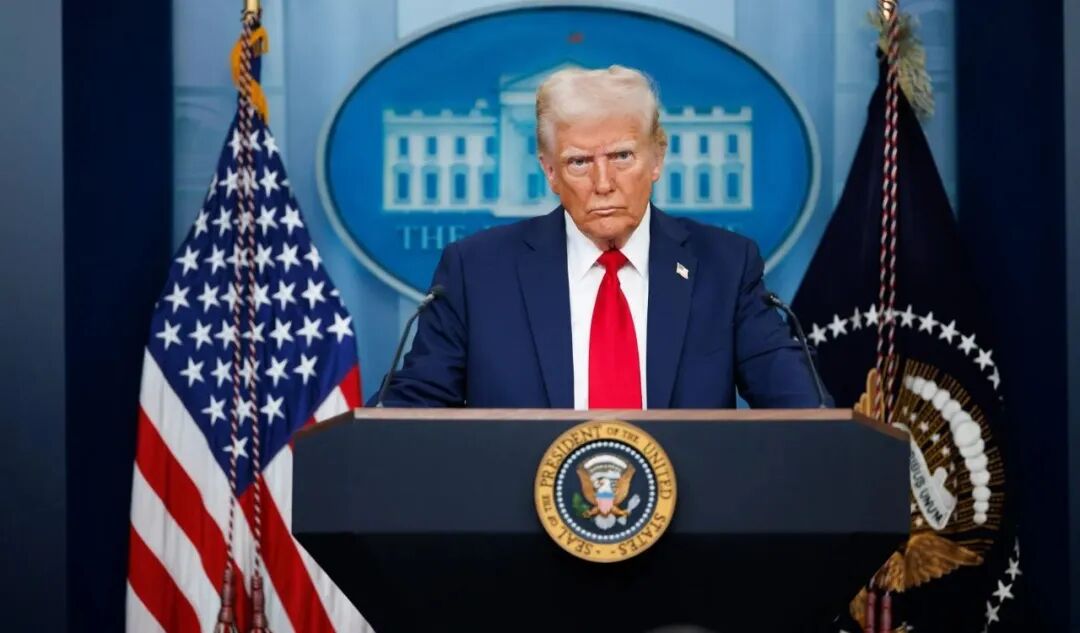
On April 17 local time, U.S. President Trump signed a new executive order, vowing to "restore the competitiveness of the U.S. seafood industry" and taking direct aim at seafood import dependence, illegal fishing, and "unfair trade practices." This executive order strengthens and extends the 2020 "Promoting American Seafood Competitiveness and Economic Growth" order, sending a strong signal that the United States will tighten seafood trade regulation and prioritize support for domestic fishery development.
In his statement, Trump said bluntly: "Today, nearly 90% of the seafood on our shelves is imported, and the U.S. seafood trade deficit exceeds $20 billion. This is entirely the result of overregulation and unfair trade. The United States should be the global seafood leader, but we are being weakened."
The executive order explicitly requires the National Marine Fisheries Service (NMFS) to carry out the following three core tasks:
- Introduce advanced scientific research programs
- Modernize fishery data collection
- Expand commercial fishing opportunities
Crack down on illegal seafood, reassess the possibility of opening protected areas to fishing
The order also proposes formulating a new "seafood trade strategy," focusing on combating illegal, unreported, and unregulated (IUU) fishing, restricting imported seafood produced under excessively low environmental and labor standards, and requiring strengthened scrutiny of the trade practices of major seafood-exporting countries, including the possible use of Section 301 investigations.
At the same time, Trump also announced the lifting of the commercial fishing ban in the Pacific Remote Islands Marine National Monument (PRIMNM), and plans to reassess whether all marine national monuments can be opened to commercial fishing. This area spans 490,000 square miles and is one of the world's most intact tropical island and deep-sea ecological protection groups.
Targeting China: port fees, shipping investigations, and shipbuilding included in "revitalization plan"
More notably, on the day the executive order was issued, the Office of the United States Trade Representative (USTR) also announced follow-up actions under the Section 301 investigation into China's shipbuilding, maritime, and logistics sectors:
- All Chinese-built or Chinese-owned vessels calling at U.S. ports will be charged a port fee of $50 per net ton (officially taking effect after 180 days),
- The fees will rise gradually over the next three years,
- The revenue will be earmarked specifically for "revitalizing the U.S. shipbuilding industry."
This move is widely interpreted as a further restriction on China's maritime industry and may cause chain reactions affecting the aquatic product import and export transportation chain.
Industry reaction: U.S. seafood alliance voices support, new policy may trigger global trade shockwaves
The National Fisheries Institute (NFI) expressed support at the first opportunity, calling the new policy a "strategic measure to support U.S. seafood production and consumption," which will help reduce the regulatory burden on fisheries and also enhance the dissemination of seafood's public health value.
However, against the backdrop of a constantly changing global seafood trade landscape and major exporting countries being hit one after another by U.S. policy, this executive order may bring a new round of shockwaves to the global aquatic industry. In the future, whether the United States will use this as a starting point to launch a broader "seafood tariff and regulatory offensive" deserves close attention.
The Trump administration's new policy is both a "defensive battle" for the U.S. domestic seafood industry and a "restructuring order" for the global aquatic supply chain. From port control to import review, from opening protected areas to trade investigations, seafood has become a new frontline in global competition.
Next, how major seafood-exporting countries such as China, Vietnam, India, Norway, and Ecuador respond will directly affect the global seafood supply landscape.
For more articles, please click to read
Comments(0)
No comments yet. Be the first to comment.